Phoenix Housing Market Update: Fall 2026 | Phoenix Living
Phoenix Housing Market Update: Fall 2026
If the housing market feels a little sleepy right now, you're not imagining it. Sellers are seeing fewer showings. Buyers, especially younger ones, feel squeezed. Builders are stuck between rising costs and fewer customers.
I read a lot of economic commentary so you don't have to, and a recent national outlook laid out the big picture well. Let's walk through it, skip the jargon, and talk about what it actually means if you're thinking about buying or selling here in the Valley.
The Short Version
Nationally, housing is in a slow, grinding reset. Not a crash, not a boom. Prices have mostly leveled off, mortgage rates have settled around 7%, and fewer people are out shopping for homes. Over time, flat prices plus rising incomes should bring the market back into better balance. But housing heals slowly, so this isn't a "wait two months and it'll change" situation.
Buyer Traffic Is Way Down
One of the clearest signals is how many people are actually out looking. A monthly survey of home builders measuring buyer traffic dropped to 18 in early October, its lowest reading in nearly 15 years.
Homeownership is slipping too. It climbed to 66.0% in 2022, then eased back to 65.2% by mid-2026, with the steepest drop among buyers under 35.
Why? It mostly comes down to three things: affordability, tighter lending and slower population growth.
Prices: Better News for Buyers Than You Might Think
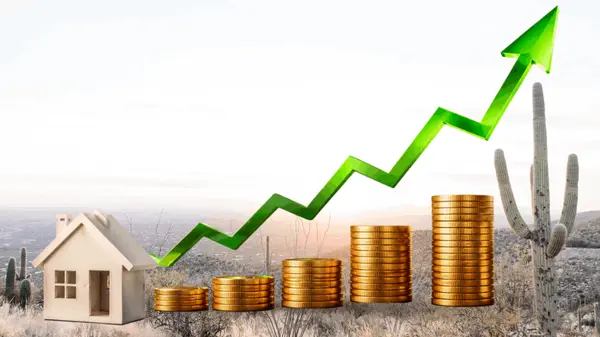
Here's the part that doesn't get talked about enough. From roughly 2019 to 2022, home prices jumped somewhere between 35% and 42% depending on how you measure. Over the last four years, though, price changes have ranged from slightly negative to about 15%.
Meanwhile, income per person has grown about 23% over that same stretch. Translation: compared to paychecks, homes are actually more affordable on price than they were a few years ago.
And if you (or a generous family member) had money in the stock market, the past few years have been very good to you, which can make a down payment a lot more doable.
Rates: The Real Pain Point
The challenge has shifted from prices to interest rates. The 30-year fixed rate rose more than a full point over the past year and was recently around 7.32%.
That stings. But here's some perspective I share with clients all the time: over the last 50 years, the 30-year rate has averaged about 7.68%. The super-low rates we got used to between 2008 and 2021, averaging around 4.15%, were the exception, not the norm.
Many economists don't expect rates to fall much below 7% anytime soon unless the economy slips into a recession. So if you're waiting for 3% to come back, I'd gently suggest building your plan around today's reality instead.
Lending Is Stricter (and That's Not All Bad)
Loan standards have tightened back to where they were before the mid-2000s housing bubble. That can be frustrating if you're trying to qualify. The upside is fewer risky loans, fewer foreclosures down the road, and more stability for everyone who already owns.
Fewer People, Less Demand
This one is bigger than most people realize. In the first two decades of this century, the U.S. added about 2.4 million people a year. With an aging population, lower birth rates and a sharp drop in immigration, some forecasts now call for growth of only around 800,000 a year. That means the country needs far fewer new homes each year than it used to.
Supply Is Quietly Building
On the other side of the equation, more homes are becoming available:
- Rental vacancies have climbed from 5.6% to 7.3% over four years, and homeowner vacancies have ticked up as well.
- The "rate lock" effect is slowly easing. Back in 2021, almost 15 million homeowners had mortgages under 3%. By this summer, that number dropped below 12 million as people moved on with life events like new jobs, growing families and retirement.
- Builders are pulling back. National housing starts are projected around 1.32 million this year and lower in 2027, because labor, materials and borrowing costs are all up.
More supply plus softer demand generally means price growth stays modest.
So What Does This Mean in Phoenix?
National headlines are a starting point, not the whole story. Real estate is local, and the Valley can look very different from one neighborhood (or even one street) to the next.
If you're buying:
- You likely have more negotiating room than buyers did in 2021 or 2022. Seller concessions, repair credits and closing cost help are all worth asking about.
- In new-build communities, ask builders about incentives like rate buydowns. With builders under pressure, it's worth the conversation.
- Focus on a monthly payment you're comfortable with today. If rates do drop later, refinancing is an option. Getting the right home at a fair price matters most.
If you're selling:
- Pricing strategy is everything right now. Buyers are careful and well-informed, so homes priced right from day one tend to perform best.
- Presentation matters more in a slower market. Small updates, great photos and a clean, move-in-ready feel help you stand out.
- Be ready to negotiate thoughtfully. A smart concession can be the difference between sitting on the market and closing.
If you're on the fence: The best time to buy or sell isn't about timing the market perfectly. It's about what makes sense for your life, your budget and your goals. That's exactly the kind of conversation I love having.
The Bottom Line
The national housing market is moving slowly, and it will probably stay that way for a while. But a slow market isn't a bad market for everyone. Buyers have more breathing room on price, sellers who prepare well still do great, and having a clear strategy makes all the difference.
If you're wondering what this means for your neighborhood, your home or your next move, reach out. I'm always happy to talk it through, no pressure.
Love where you live! Let me help get you there!
Jennifer Haugebak · Phoenix Living · Real Broker · Jennifer@PhoenixLivingRE.com · (602) 529-5107
Categories
Recent Posts




GET MORE INFORMATION